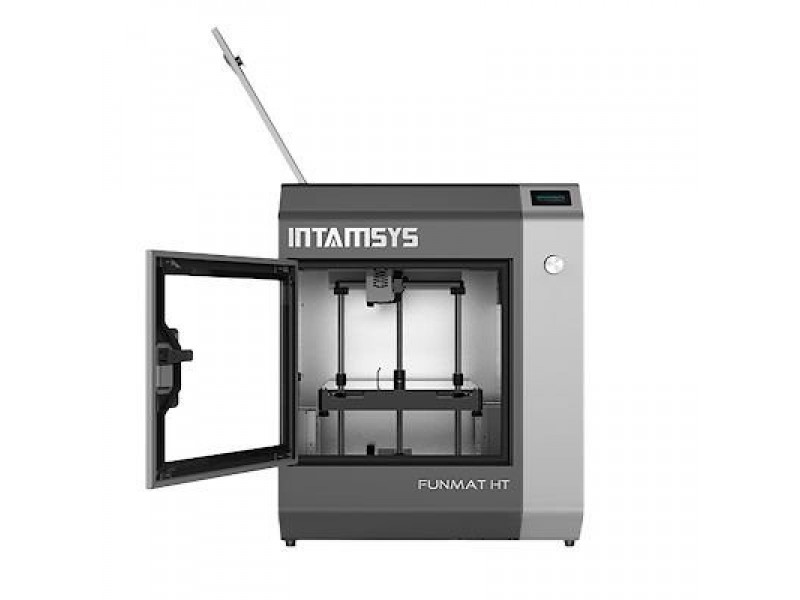
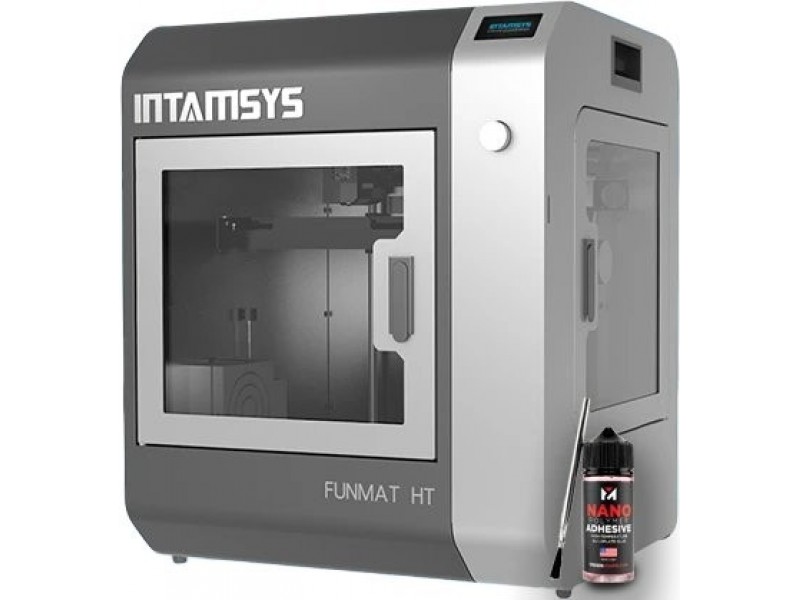
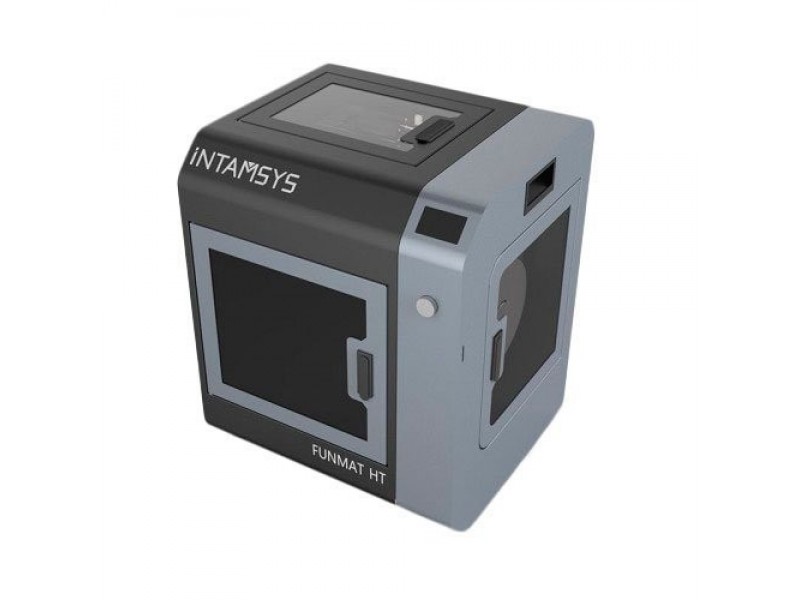
The Funmat HT Enhanced is a step forward in the Intamsys Funmat family. This high-temperature industrial FDM 3D printer has been designed to reliably print with high-performance professional-grade materials like PEEK, ULTEM, PEI, and PPSU. Despite its advanced printing capability, the Funmat HT Enhanced sells at a reasonable price, being ideal for most small businesses looking to enter the professional 3D printing world.
The Funmat HT Enhanced is an upgraded version of the standard Funmat, hence the name. Unlike its predecessor, it features a convenient auto-leveling function with improved nozzle, 4 independent drivers for the different axis and for the filament loading, and a redesigned removable glass-ceramic build plate with PI film. The improved hot bed alongside the constant-temperature heated build chamber grants excellent thermal and noise insulation. Thanks to these enhancements, the Funmat HT lets you produce parts with difficult-to-print engineering-grade consumables right out of the box.
To streamline your printing experience, the HT Enhanced features a filament absent warning that alerts you when the material is getting low as well as a battery backup for pausing the print in case of power outages. Ideal for small businesses and 3D printing services, the Funmat HT Enhanced is ideal for manufacturing complex yet extremely resistant parts. Read our review to learn more about this high-performance 3D printer.
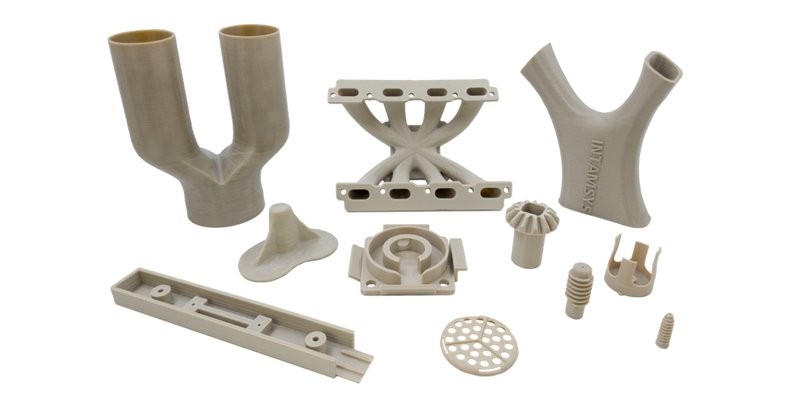
The below-pictured end-use components are made in ULTEM.
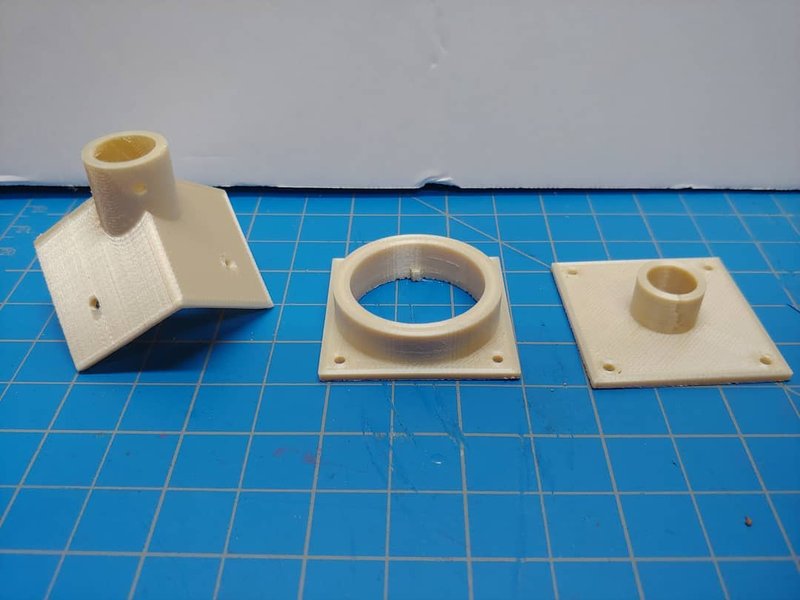
Credit: @shmaggy3d / Instagram
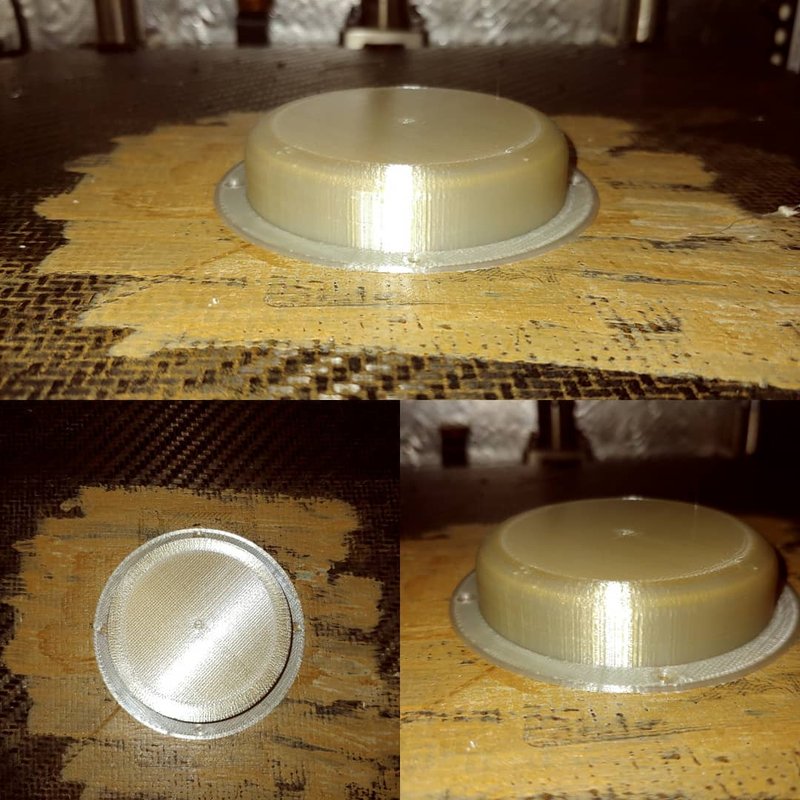
Credit: @shmaggy3d / Instagram
The Intamsys Funmat HT Enhanced is an industrial high-temperature FDM 3D printer. It can print layers at 50 microns, delivering high-resolution parts with smooth surfaces and a high level of detail.
This single-extrusion device has an XY positioning accuracy of 25 microns and a Z accuracy of 2,5 microns. The print speed ranges from 30 to 200 mm/s.
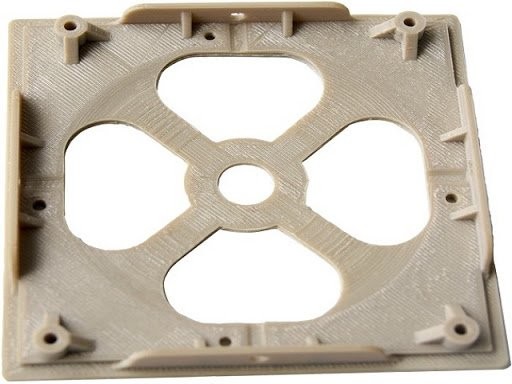
The Funmat HT Enhanced supports swappable all-metal nozzles. It comes stock with a 0.4mm nozzle, which provides the best balance between print speed and detail. Based on your project requirements, you can install nozzles with a size ranging from 0.1 to 0.8 mm.
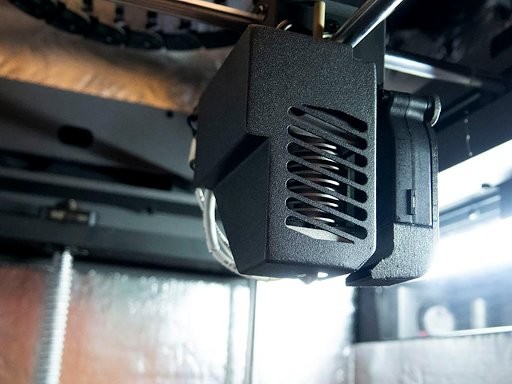
Equipped with quality components, the HT Enhanced sports state-of-the-art motors and drivers, which make for high-precision, excellent quality prints with an accuracy of up to 12.5 microns.
The Intamsys Funmat HT Enhanced prints with engineering-grade high-temperature materials like PEEK, PEI, PEI Blends, PPSU, PA/CF, PC, PC Alloys, PA, ABS, Carbon Fiber-Filled, Metal-Filled, Fiberglass-Filled, Nylon, ASA, PETG, ESD-Safe, HIPS, TPU, PLA, and PVA.
Its Bowden-type single extruder can heat up to 450°C.
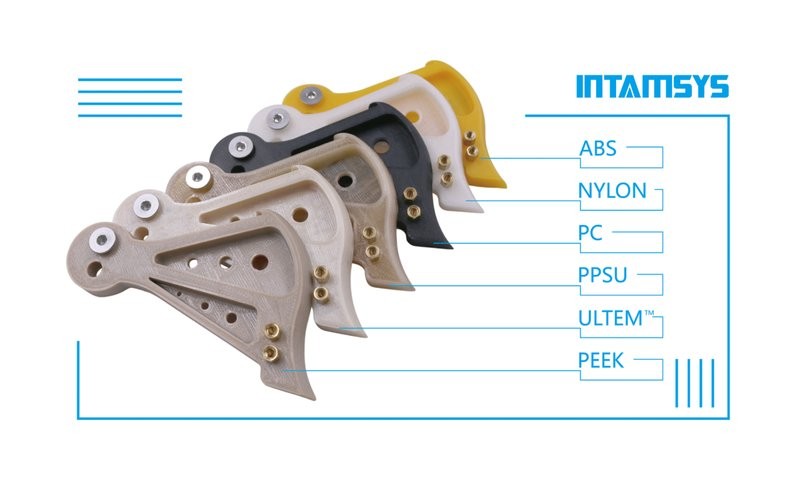
Unlike many FDM printers, the Funmat HT Enhanced has a heated print bed and closed heated print chamber, which means it can reliably print with specialty heat- and chemical-resistant filaments. The print bed heats up to 160°C, while the camber can reach 90°C. This high-temperature environment allows producing extra-strong parts that perform at operating temperatures of over 300°C.
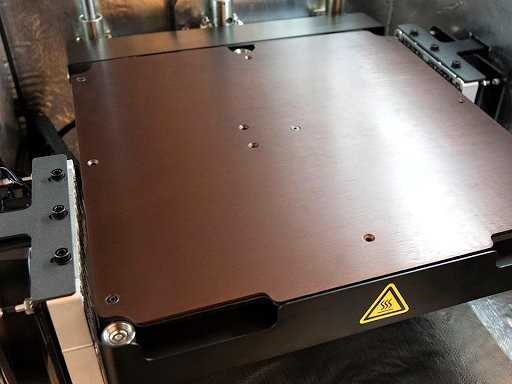
The Intamsys Funmat HT Enhanced features an open material system. Thus, it can print with any type of 1.75 mm filament, providing you with a wide choice of materials.
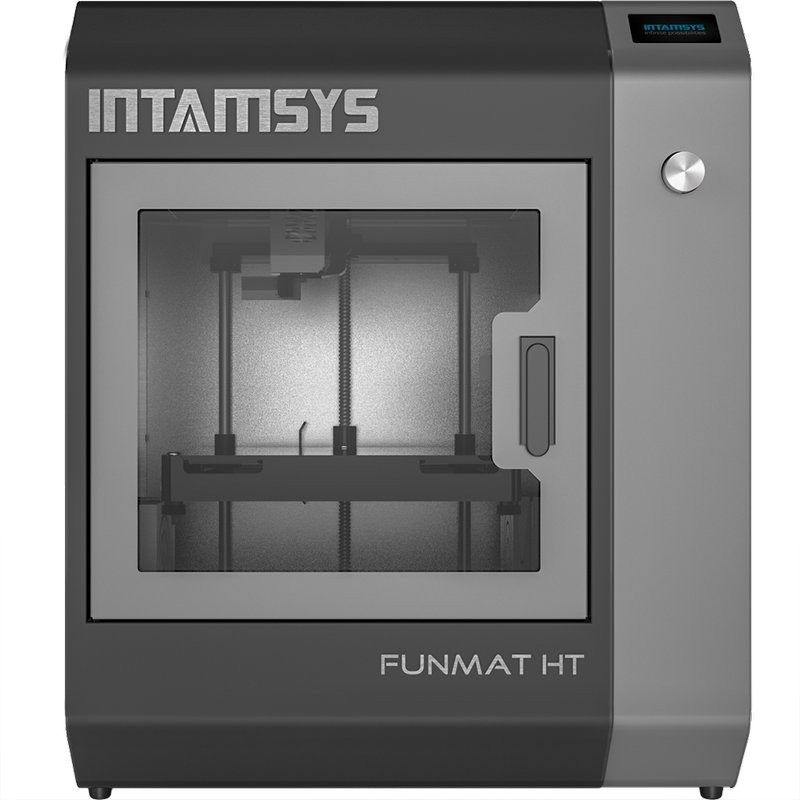
The Intamsys Funmat HT Enhanced has a build area of 260 x 260 x 260 mm. It lets you print most of your models in one piece, without the need of splitting them into parts.
Equipped with a full-color touch-screen, the Funmat HT can be conveniently operated without the need for an external computer. It has both an SD card slot and a USB interface for standalone printing. The printer interface supports both Chinese and English.
The device includes a built-in camera for remote monitoring.
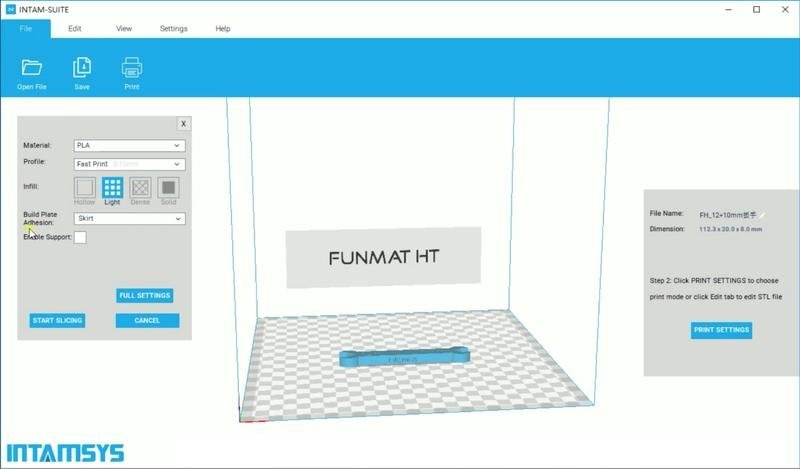
The printer software, INTAM-Suite, is compatible with the most popular slicing software, including Cura and Simplify 3D. It runs on Windows, Mac and Linux systems and supports input files in STL, OBJ, and X3D and output files in G-Code.
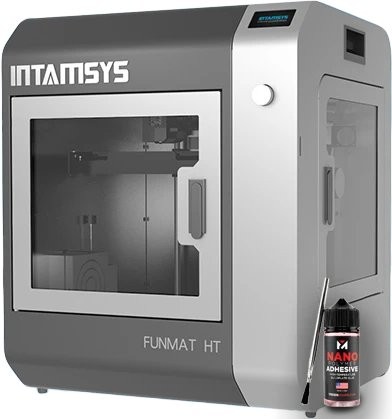
The printer ships on a mini-pallet.
For some items, package content may change. In case of any questions, please get in touch.
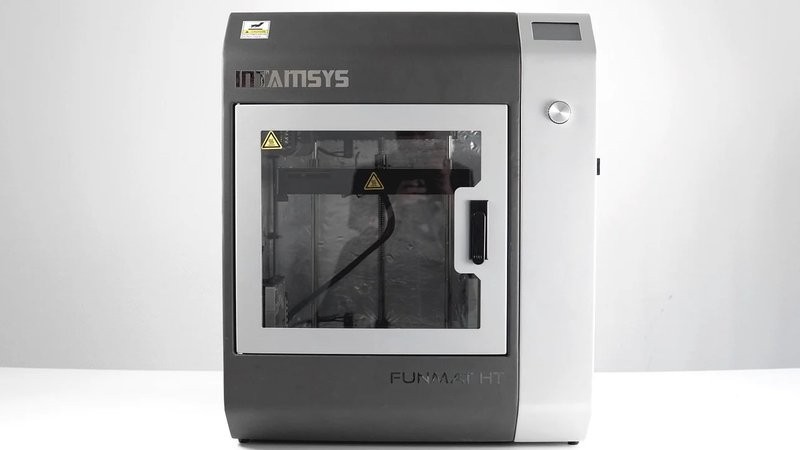
The Intamsys Funmat HT Enhanced 3D printer is available in a dark and light gray color scheme. Its stylish look makes it ideal for industrial applications in engineering, automotive, aerospace, and more.
The printer dimensions are 20.9 x 19.3 x 25.4 inches (530 x 490 x 645 mm). It weighs 95 lb (43 kg). The spool holder is mounted on the side of the case.
The price of the Intamsys Funmat HT Enhanced 3D printer is $5,995.00, which is reasonable considering its functionality, high-temperature capability, and high performance.
Update your browser to view this website correctly. Update my browser now